Forest and Woodland Management for White-tailed in September.
It may be 95 degrees in the middle of August, but many avid deer hunters are already thinking about the fall hunting seasons. Some landowners may be preparing to plant their favorite food plot mixes between late August and October; there are still some habitat practices to carry out on cooler mornings in September. In wooded areas, September is a good time for timber stand improvement (e.g., selective harvesting, thinning) and edge feathering to increase habitat diversity. These actions can enhance mast production and early successional vegetation, both important for deer.
Management Practices That Improve Deer Habitat
Healthy deer populations depend on diverse, productive habitat. Two of the most effective woodland management tools are timber stand improvement and creating forest openings. Both practices increase sunlight, stimulate plant growth, and boost the availability of natural forage.
Timber Stand Improvement (TSI)
Timber stand improvement is a mid‑rotation forest treatment that removes low‑value or unhealthy trees to favor desirable species like oaks and hickories. By thinning crowded stands, TSI:
Allows more sunlight to reach the forest floor, increasing native browse and herbaceous growth.
Improves oak regeneration, supporting long‑term acorn production.
Gives remaining trees more space, resulting in larger crowns and higher mast yields.
TSI ultimately creates a more open woodland structure rich in deer forage and seasonal food sources.
Creating Openings in Forests and Woodlands
Large, unbroken tracts of timber often lack the diversity deer need. Strategic openings increase plant variety, sunlight, and food availability. Landowners typically aim for five to ten openings per 100 acres, each ranging from 1 to 5 acres.
Temporary Openings
Temporary openings, or group cuts, are small clearcuts designed to jump‑start early successional habitat. These areas quickly fill with sprouts, shrubs, grasses, and forbs—prime deer forage. They also encourage regeneration of shade‑intolerant oaks.
Permanent Openings
Permanent openings remain open year‑round and can be planted in perennial food plots or maintained in herbaceous vegetation. Irregular shapes create more edge habitat, and ridge‑top or flat locations help reduce erosion. These openings provide predictable forage and complement surrounding woodland cover.
Why These Practices Matter
Both TSI and forest openings increase sunlight, stimulate plant growth, and diversify habitat structure. The result is a landscape with:
More browse and seasonal forage
Better oak regeneration and mast production
Increased edge habitat
Improved deer nutrition and visibility
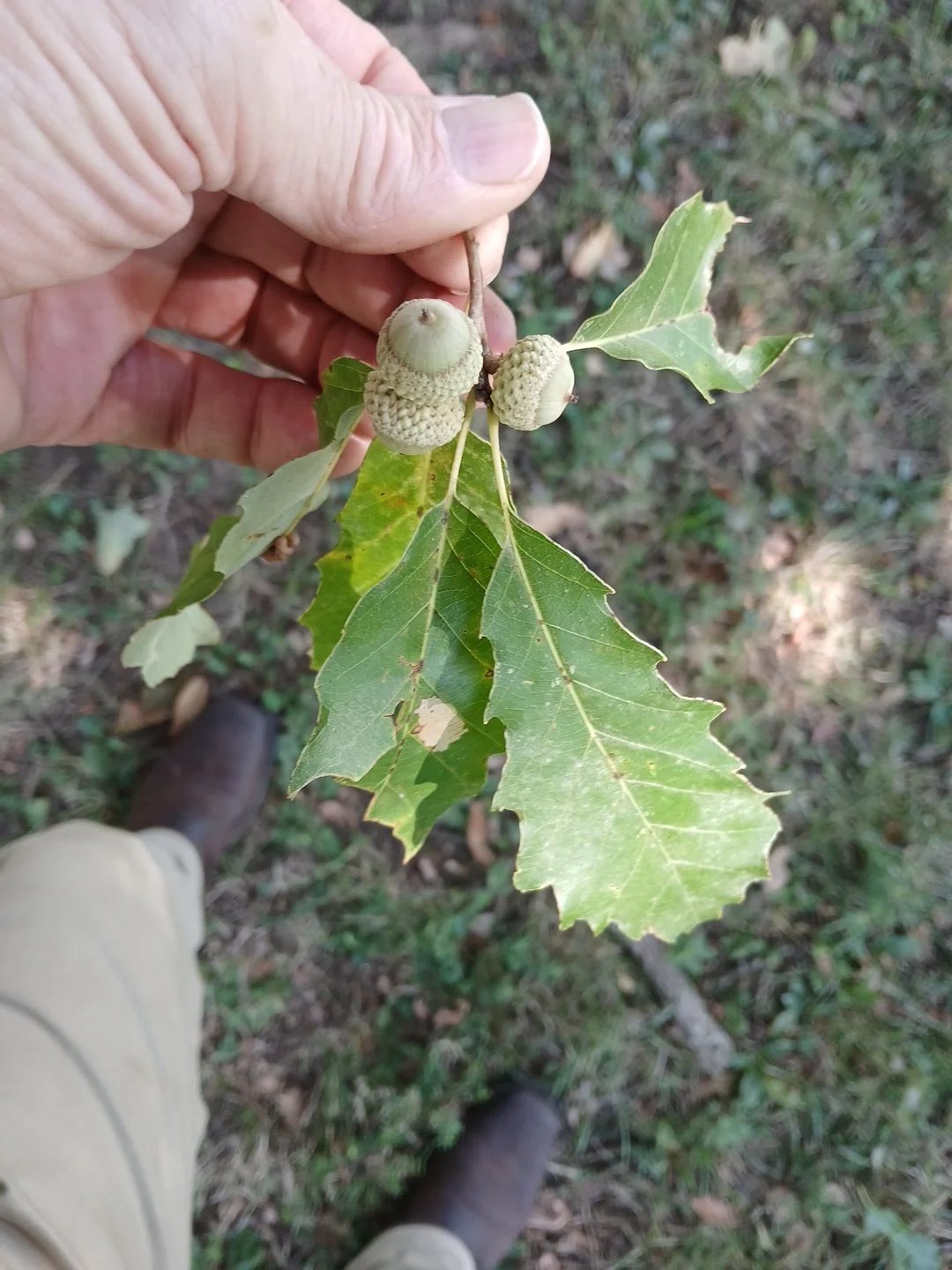
Chinkapin oak (Quercus muehlenbergii). Belonging to the white oak family, being less bitter, deer and other wildlife prefer these acorns over those from the red oak family. Good forest stand improvement can help this oak species mature for future acorn production. Photo by Tim Russell
Together, these practices form the foundation of deer‑focused woodland management.
If you need assistance, feel free to reach out to us here at Antlers & Oaks Stewardship Services, to assist you in planning habitat practices that will continue to draw deer year round on your property.