

Missouri‑Focused Summary of the Public Lands Rule Repeal
The debate over the Public Lands Rule matters for Missouri because our state depends heavily on healthy oak–hickory forests, working farms, and wildlife habitat across both private and federally managed lands. Energy development, grazing, recreation and conservation all intersect here—especially in the Ozarks, where federal lands influence water quality, wildlife populations and local economies.
Energy vs. Conservation: A False Choice
Interior Secretary Doug Burgum’s comment that energy industries are “customers” oversimplifies the issue. In Missouri, all citizens are the customers, because public lands and their resources belong to everyone. Treating conservation and energy as opposing forces creates unproductive conflict and weakens the ability of Missouri biologists, foresters and landowners to reduce impacts on wildlife and habitat.
What the Public Lands Rule Did
The rule formally placed conservation on equal footing with grazing, mining, energy and recreation. It strengthened ecosystem‑health standards and introduced tools like restoration leasing—a mechanism that could have supported large‑scale habitat work in Missouri’s oak woodlands, glades and riparian corridors.
What the Repeal Actually Changes
Despite strong rhetoric, the repeal does not erase conservation from federal law. The Federal Land Policy and Management Act (FLPMA) still requires the Bureau of Land Management to:
Protect ecological and wildlife values
Prevent unnecessary degradation
Manage for multiple uses—not just the highest revenue
Conservation remains a legal mandate. What’s lost is the explicit regulatory framing that elevated conservation as a named “use.”
Real Implications for Missouri
The repeal creates several practical challenges for Missouri’s wildlife and land‑stewardship community:
More pressure on local decision‑makers to ensure wildlife and habitat concerns are included in federal planning.
Loss of new conservation tools, such as restoration leasing, which could have supported glade restoration, woodland thinning and riparian recovery.
Greater risk of imbalance, as political rhetoric may push agencies toward extractive uses unless professionals actively advocate for ecological values.
Inconsistent regional interpretations, potentially affecting Missouri differently than western states with larger federal land footprints.
Still, Missouri conservationists are not starting over. FLPMA’s foundation remains intact, and professionals have long worked effectively within it.
Moving Forward in Missouri
The repeal is not a reason for discouragement. Missouri’s wildlife and forestry community can maintain conservation’s role by:
Leaning on science and field data in every planning process
Strengthening collaboration among MDC, NRCS, private landowners and NGOs
Advocating clearly for oak–hickory forest health, glade restoration, riparian protection, and wildlife habitat needs
Rejecting narratives that diminish conservation’s legitimacy
Missouri’s stewardship tradition—from Aldo Leopold’s influence to modern woodland restoration—reminds us that conservation is a long‑term commitment, not a political moment.
Public lands belong to all Americans, and Missourians share the responsibility to steward them wisely. If we are all customers, then we are all stakeholders in the outcome.
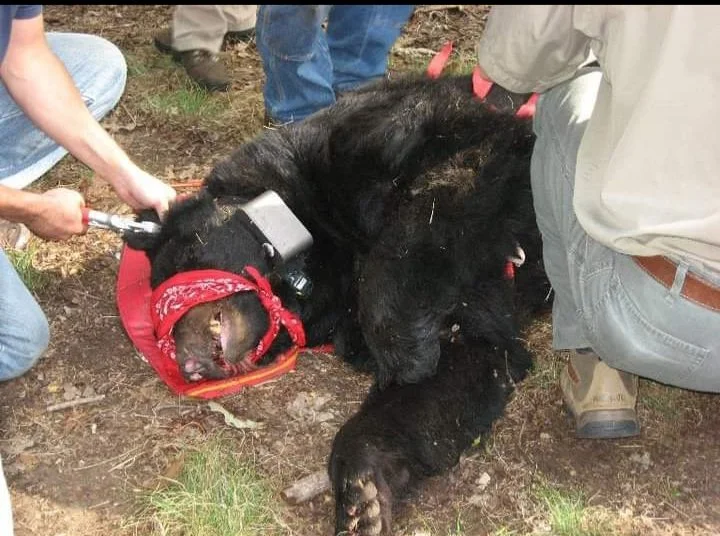
Black bear being fitted with a GPS collar and collecting DNA for the Missouri Black Bear Project. 2015. Photo by Tim Russell